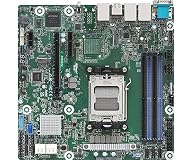
Best motherboards for programming and AI workstations
Disclosure: When you buy through our links, we may earn a commission. Learn more›
The motherboards in the catalogue Argusic tracks, in one table you can filter by what you will build: a workstation for code and local AI, a gaming PC, a home server, or a small case. Filter by socket, board size, memory, expansion slots, network and price, then read the buying guide below the table for what each choice changes.
Nothing here was tested hands-on. Specs are what the seller states, and the Use for rules are Argusic's, printed beside the filter.
Right now: 278 motherboards, each with a price read in the store's window, 272 in stock. Latest price read 10/19/2026 11:05 PDT.
Top picks
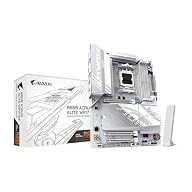
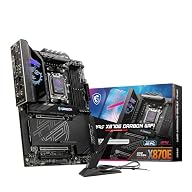
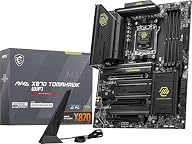
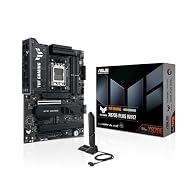
Three popular picks from the table below, one per brand, refreshed with the prices; commissions never change the order.
Listing 278 motherboards priced from $70. Colours of one product share a row.
Use forThe rules
AI & workstation: Room to grow, as the listing states it: a maximum of 128 GB of memory or more, or 8 or more memory slots, or 2 or more PCIe x16 slots (a second graphics card), or 4 or more M.2 slots. One is enough. A board stated to have 2 memory slots, or one that states all four and meets none, is left out; a board that states none of them is not judged.
Gaming: A socket for current desktop gaming processors: AM5, AM4, LGA1851, LGA1700. Server and workstation sockets and older desktop sockets are left out. The socket has to be stated.
Home server: ECC memory support stated, or wired LAN faster than gigabit (2.5G, 5G or 10G) together with 4 or more SATA ports or 3 or more M.2 slots. A board whose fastest stated LAN is 1G and that does not state ECC is left out.
Small build: A Mini-ITX or Micro-ATX board, for a small case. ATX and E-ATX boards are left out. The board size has to be stated.
A motherboard whose listing does not state what a rule needs is not counted as meeting it. Ticking two uses shows motherboards that meet both.
20 shown of 278 matching
Recommended: $220 to $600 first, popular first, one brand at a time; rows priced at another store take every third place while any are left. This is Argusic's editorial default, not a quality ranking. Commissions never change the order.
Best motherboards for programming and AI workstations
A development machine grows: more memory for containers, virtual machines and large builds, a second graphics card for local models, another NVMe drive for datasets. The motherboard decides how far it can grow, so check what it states about memory, PCIe x16 slots and M.2 slots before the processor and the price.
88 motherboards of the 278 in this table meet the AI & workstation rule printed beside the filter, from $95.49 to $2,128.90 at the last price check. 169 motherboards do not state enough to judge and are never counted as meeting it.
Socket and memory type: what fits
The socket decides which processors fit, and the memory type decides which memory sticks fit: a board takes DDR4 or DDR5, never both in the same slots. Pick the processor first, then a board with its socket.
The most common stated sockets in this table: AM5, 88; LGA1700, 51; AM4, 25; LGA2011, 23; LGA2011-3, 14; LGA1851, 11; LGA4189, 9; LGA1151, 7. 1 motherboard does not state one.
By stated memory type: 144 DDR5 boards and 79 DDR4 boards. 55 motherboards do not state one.
Memory slots and maximum memory
A board with 2 memory slots is full once both are used, so adding memory later means replacing the sticks; 4 slots leave room, and workstation and server boards often have more. The maximum memory is the ceiling the maker states for the board.
126 boards state a memory slot count: 21 with 2, 69 with 4 and 35 with 8 or more. 41 boards state a maximum memory. 35 motherboards take 128 GB or more, the most 8 TB.
PCIe x16 slots and M.2 slots
A graphics card goes in a PCIe x16 slot, so a second card for local models needs a second x16 slot (and a case and power supply with room for it). NVMe drives go in M.2 slots on the board itself. Counts below are only what a listing states as a number.
82 boards state a PCIe x16 slot count. 32 motherboards have 2 or more, the most 7. 129 boards state an M.2 slot count. 26 motherboards have 4 or more, the most 7.
Motherboards for gaming
For a gaming PC the board mostly has to carry the processor and the graphics card well. The Gaming rule here asks only for a socket of the current desktop processors (AM5, AM4, LGA1851 and LGA1700); the processor and the graphics card decide the frame rate.
175 motherboards of the 278 in this table meet the Gaming rule printed beside the filter, from $74.99 to $3,380.26 at the last price check. 1 motherboard does not state enough to judge and is never counted as meeting it.
Motherboards for a home server
A home server or NAS runs all day and holds data, so three things matter: memory that guards against errors, a network port fast enough for file copies, and room for drives. Per Wikipedia's ECC memory article, ECC memory corrects single-bit errors and is used where data corruption cannot be tolerated; the board and processor have to support it, which is why only boards that state ECC support count here.
95 motherboards of the 278 in this table meet the Home server rule printed beside the filter, from $79.99 to $2,978.60 at the last price check. 145 motherboards do not state enough to judge and are never counted as meeting it.
By the fastest stated wired LAN: 10G, 28; 5G, 19; 2.5G, 81; 1G, 52. 98 motherboards do not state one. 48 motherboards state ECC support. 36 motherboards state 4 or more SATA ports.
Motherboards for a small build
The board size has to match the case. Mini-ITX is the smallest of the four sizes here; Micro-ATX is a step up; ATX and E-ATX need a mid or full tower. A case that takes ATX also takes the smaller sizes.
97 motherboards of the 278 in this table meet the Small build rule printed beside the filter, from $74.99 to $3,897.00 at the last price check. 65 motherboards do not state enough to judge and are never counted as meeting it.
Stated board sizes in this table: E-ATX, 9; ATX, 107; Micro-ATX, 84; Mini-ITX, 13. 65 motherboards do not state one.
Frequently asked questions (FAQs)
What motherboard do I need for programming?
One with the socket of the processor you picked and room to grow: 4 or more memory slots, and more than one M.2 slot if you keep projects and datasets on fast drives. Code itself needs nothing special from the board. The most common stated sockets here: AM5, 88; LGA1700, 51; AM4, 25; LGA2011, 23; LGA2011-3, 14.
What should a motherboard for local AI have?
Room for memory and graphics cards: a high stated maximum memory, and 2 or more PCIe x16 slots if you may add a second card. 32 motherboards in this table state 2 or more PCIe x16 slots.
DDR4 or DDR5 motherboard?
The board decides: its slots take one type, and the sticks of the other type do not fit. This table has 144 DDR5 boards and 79 DDR4 boards by stated memory type.
Do I need ECC memory for a home server?
Not to run one, but ECC corrects single-bit memory errors, which matters for a machine that stores data all day. Only a board and processor that support it can use it. 48 motherboards in this table state ECC support. Source: Wikipedia's ECC memory article
Is Micro-ATX or Mini-ITX big enough?
For a build with one graphics card, often yes. A smaller board usually has fewer memory slots, M.2 slots and PCIe slots, so check the counts it states if you plan to add parts later.
Do I need Wi-Fi on the motherboard?
Only if the PC cannot reach a network cable; a wired port is steadier for large transfers. Stated Wi-Fi in this table: Wi-Fi 7, 53; Wi-Fi 6E, 44; Wi-Fi 6, 15; Wi-Fi 5, 2.
How this page is built
Prices come from the stores Argusic tracks. An Amazon price counts when it was read in the last 24 hours, another store's price when it was read in the last 48 hours, because those feeds arrive once a day. Each price shows the store and the time it was read. Motherboards priced under $70 are not listed. 278 motherboards are listed now.
Specs are what each seller states on its listing; Argusic has not tested these boards hands-on. A slot or port count is kept only when the listing states it as a number, and a listing that states two different counts for the same part keeps neither. The Use for rules are Argusic's and printed beside the filter, and a board whose listing does not state what a rule needs is never counted as meeting it.
The default order, Recommended, puts a middle price band first, then the bands on either side, then the rest; within each band popular models come first and brands take turns. The Top picks block shows one model per brand. The order is an editorial default, not a quality ranking, and commissions never change the order or any number.
This build: 2026-10-19 18:08 UTC.
Product prices and availability are accurate as of the date/time indicated and are subject to change. Any price and availability information displayed on Amazon.com at the time of purchase will apply to the purchase of this product.
CERTAIN CONTENT THAT APPEARS ON THIS SITE COMES FROM AMAZON. THIS CONTENT IS PROVIDED 'AS IS' AND IS SUBJECT TO CHANGE OR REMOVAL AT ANY TIME.
Prices from other stores are read from the store's product feed once a day and are accurate as of the date/time indicated. The price and availability on the store's site at the time of purchase apply.
Comments never affect rankings or any number on this page.
Discussion
Best motherboards for programming and AI builds | Argusic