Disclosure: When you buy through our links, we may earn a commission. Learn more›
The graphics cards in the catalogue Argusic tracks, in one table you can filter by what you will run on it: language models and other AI on your own machine, games, or video work. Filter by VRAM, chip maker and price, then read the buying guide below the table for what each choice changes.
Nothing here was tested hands-on. Specs are what the seller states, memory bandwidth is the maker's, and the largest AI model a card can hold is marked Estimated, by the method on the methodology page.
Right now: 166 graphics cards, each with a price read in the store's window, 152 in stock. Latest price read 10/19/2026 11:08 PDT.
Top picks
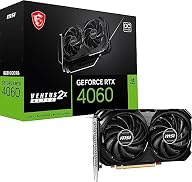
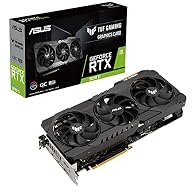
Three popular picks from the table below, one per brand, refreshed with the prices; commissions never change the order.
Listing 166 graphics cards priced from $150. Colours of one product share a row.
Use forThe rules
Local AI & LLMs: at least 12 GB of GPU memory (VRAM), stated by the seller: enough for a 14B model at Q4 with an 8,192-token context (about 10.9 GB by the Argusic estimate). A card that does not state its VRAM is not counted.
Gaming: at least 8 GB of VRAM, stated, on a gaming chip: GeForce RTX or GTX, Radeon RX, or Intel Arc A or B series. Workstation and datacenter cards (RTX PRO, RTX A-series, Quadro, Arc Pro, Tesla, A100) are left out.
Video editing: at least 12 GB of VRAM, stated, on a card with display outputs. Datacenter cards (Tesla, Grid, A100, H100, L40) are left out.
A graphics card whose listing does not state what a rule needs is not counted as meeting it. Ticking two uses shows graphics cards that meet both.
20 shown of 166 matching
Recommended: $650 to $1,800 first, popular first, one brand at a time; rows priced at another store take every third place while any are left. This is Argusic's editorial default, not a quality ranking. Commissions never change the order.
For a language model on your own machine, the card's memory (VRAM) decides which model fits and its memory bandwidth decides how fast it writes. Open-source runners such as llama.cpp run models on NVIDIA, AMD and Intel cards, and can split a model between the card and system memory to partially accelerate one larger than the VRAM.
By Argusic's estimate, a model quantized to Q4_K_M (a 4-bit format described in llama.cpp's quantize notes) with an 8,192-token context needs about 7.1 GB for 8B parameters, about 22.7 GB for 32B and about 46.5 GB for 70B. The method is on the methodology page; every model size and speed on this page carries the Estimated label because none was measured.
113 cards in this table have room for an 8B model by the estimate, 27 for a 32B model and 11 for a 70B model. A card whose VRAM is not stated is never counted as able to.
74 cards of the 166 in this table meet the Local AI rule printed beside the filter, from $449.82 to $21,999.00 at the last price check. 12 cards do not state enough to judge and are never counted as meeting it.
VRAM: the model has to fit
Buy VRAM for the largest model you plan to run, plus room for its context.
113 cards in this table state 8 GB of VRAM or more, 49 16 GB or more, 27 24 GB or more and 25 32 GB or more; the most is 96 GB. 12 cards do not state VRAM.
Memory bandwidth: the speed limit
To write each token, the card reads the model's weights from memory, so memory bandwidth divided by the model's size sets an upper bound on tokens per second. The bound is shown on each row that has both figures, labeled Estimated; real speed is at or below it and depends on the runner. The method is on the methodology page.
92 cards in this table are matched to the maker's bandwidth figure, from 160 to 1,792 GB/s. 74 cards are not matched yet and show none.
NVIDIA, AMD or Intel
CUDA is NVIDIA's computing platform (NVIDIA's CUDA page), it runs on the NVIDIA GPUs in NVIDIA's list of CUDA GPUs, and many AI tools are built on it: if a tool you need says CUDA, you need NVIDIA. AMD's ROCm supports only the GPUs on its list (AMD's ROCm system requirements), so check the card there before you buy for ROCm. For running a model with llama.cpp, AMD cards also work through HIP or Vulkan and Intel cards through SYCL or Vulkan.
By chip maker, this table has 122 NVIDIA, 31 AMD and 13 Intel cards.
When renting a GPU beats buying
If you need a large model for a few hours a month, renting a cloud GPU can cost less than the card. Each row that runs a model shows how many months of 160 hours it takes for the cheapest verified cloud GPU of the same model size to reach the card's price, before electricity and resale. For 76 of the 76 cards with that line, it takes more than a year; fewer hours stretch it further. The rent-or-buy calculator does the sum with your own hours.
Graphics cards for gaming
For games, the resolution and settings you play at decide how much card you need. A card bought for AI also plays games, so if you do both, buy for the model you want to run first.
93 cards of the 166 in this table meet the Gaming rule printed beside the filter, from $272.50 to $12,715.00 at the last price check. 7 cards do not state enough to judge and are never counted as meeting it.
Graphics cards for video editing
Video editors and streamers lean on the card's hardware encoder. Per NVIDIA's video encode and decode support matrix, NVIDIA's GeForce cards of the Ada Lovelace (RTX 40) and Blackwell (RTX 50) generations encode AV1, and earlier GeForce generations do not. 37 cards in this table name an RTX 40 or RTX 50 series GPU.
70 cards of the 166 in this table meet the Video editing rule printed beside the filter, from $449.82 to $19,999.99 at the last price check. 10 cards do not state enough to judge and are never counted as meeting it.
Frequently asked questions (FAQs)
How much VRAM do I need to run a local LLM?
Enough for the model's weights plus its context. By Argusic's estimate at Q4_K_M with an 8,192-token context: 8B about 7.1 GB, 14B about 10.9 GB, 32B about 22.7 GB, 70B about 46.5 GB. 49 cards in this table state 16 GB of VRAM or more. Source: llama.cpp's quantize notes
Does memory bandwidth matter for running LLMs?
Yes: it sets the upper bound on how fast a model writes, because every token reads the weights from memory. Each row with a matched bandwidth shows that bound, labeled Estimated.
NVIDIA or AMD for local AI?
NVIDIA if a tool you need is written for CUDA. AMD works with runners such as llama.cpp through HIP or Vulkan; for ROCm, check that the card is on AMD's supported list. This table has 122 NVIDIA, 31 AMD and 13 Intel cards. Source: AMD's ROCm system requirements
Can I run a model larger than my VRAM?
Partly. llama.cpp can run part of the model on the card and the rest on the processor to partially accelerate a model larger than the VRAM. Source: llama.cpp
Is it cheaper to rent a GPU than to buy one?
It depends on your hours. Each row that runs a model shows how many months of 160 hours of renting reach the card's price. For 76 of the 76 cards with that line it takes more than a year. The rent-or-buy calculator on Argusic does the sum with your own hours.
Which graphics cards encode AV1?
Among NVIDIA's GeForce cards, the Ada Lovelace (RTX 40) and Blackwell (RTX 50) generations, per NVIDIA's support matrix. 37 cards here name one of those GPUs. Source: NVIDIA's video encode and decode support matrix
How this page is built
Prices come from the stores Argusic tracks. An Amazon price counts when it was read in the last 24 hours, another store's price when it was read in the last 48 hours, because those feeds arrive once a day. Each price shows the store and the time it was read. Cards priced under $150 are not listed. 166 graphics cards are listed now.
Specs are what each seller states on its listing. Memory bandwidth comes from the maker's own spec page, matched through Argusic's chip table. The largest model a card holds, its speed bound and the rent-or-buy months are estimates from VRAM, bandwidth and the cheapest verified cloud GPU, by the method on the methodology page, and are labeled Estimated. Argusic has not tested these cards hands-on.
The Use for rules are Argusic's and printed beside the filter, and a card whose listing does not state what a rule needs is never counted as meeting it. The default order, Recommended, puts a middle price band first, then the bands on either side, then the rest; within each band popular models come first and brands take turns. The Top picks block shows one model per brand. The order is an editorial default, not a quality ranking, and commissions never change the order or any number.
This build: 2026-10-19 18:08 UTC.
Product prices and availability are accurate as of the date/time indicated and are subject to change. Any price and availability information displayed on Amazon.com at the time of purchase will apply to the purchase of this product.
CERTAIN CONTENT THAT APPEARS ON THIS SITE COMES FROM AMAZON. THIS CONTENT IS PROVIDED 'AS IS' AND IS SUBJECT TO CHANGE OR REMOVAL AT ANY TIME.
Prices from other stores are read from the store's product feed once a day and are accurate as of the date/time indicated. The price and availability on the store's site at the time of purchase apply.
Comments never affect rankings or any number on this page.
Discussion
Best graphics cards for local AI and LLMs by VRAM | Argusic